
How to Talk to Your Teen
Paving the way to an open, honest relationship with your teen doesn’t happen overnight, but it also doesn’t have to be a big project. The strongest connections are often built through many small conversations. Unsure of how to talk to your teen about drinking? Below are some ways to create a sense of teamwork, trust, and openness as your teen grows.
1. Keep Conversations Two-Way
Open communication pathways are built through everyday interactions. Talking with your teen about their favorite sports team, a new band they’re listening to, or what’s for dinner, are all good topics to open the lines of communication. Just as important as talking, though, is listening. When parents listen without judgment, teens feel respected and understood.
You can reinforce two-way interactions by inviting your teen into conversations where their perspective is especially valued. Asking for their input—whether it’s choosing a family TV, planning a trip, or solving a small problem together—shows that their voice has value. Giving them opportunities to contribute builds their confidence and strengthens your relationship, creating a two-way street of communication.
2. Validate Feelings, Even When You Don’t Agree
Teenage brains continue to develop until around age 24, so teens may have trouble controlling their emotions. While you may not always agree with their perspective, acknowledging how they feel helps them feel supported rather than dismissed.
Teens may overreact because they’re feeling insecure, so don’t take it personally. Responding with empathy instead of trying to correct their behavior helps keep the door open. Validating their emotions doesn’t mean you approve of their actions; it simply means you recognize that strong feelings are a part of growing up. This will make your teen more likely to share their feelings with you in the future.
3. Create Small, Consistent Moments to Connect
Regular moments of connection, such as family meals or car rides, help communication feel natural and less pressured. Keep the conversation light unless your child dives into a deeper subject. You can ask about their day and share news about your day as well. Through these everyday interactions, you’re setting the stage for your teen to bring up more serious topics when they need your support.
Reducing distractions, such as silencing phones during meals, shows that family time truly matters. Outside of those moments, quick texts or check-ins can help parents stay connected in ways that feel comfortable to teens. Keep your messages lighthearted. You might ask what they want for dinner, check in about a ride to practice, or send a funny picture of the family pet. Speaking to kids on their terms can help open communication pathways.
4. Start the Conversation, Together
Most teens think they already know everything and that can make communication difficult. Having the right tools and being prepared with the facts will give your discussions more weight and will help your conversations feel grounded and credible.
When it comes to underage drinking, teens think that because they’re growing up, they can experiment with adult behaviors. Instead, work with your teen to brainstorm ways they can say, “No,” by using tactics like:
- Volunteering to be the designated driver
- Making a no-drinking pact with a friend who also wants to avoid underage drinking
- Being confident enough to say, “No thank you, I’m having enough fun without alcohol.”
Creating a plan will help your teen feel more confident to say, “No,” even if they feel pressured to drink when they’re with friends.
Take the Pledge as a family to stop underage drinking. Prevention is an ongoing conversation, and taking the pledge is a promise between parents and teens to keep the lines of communication open and to continue supporting each other. Give your teen all the tools they need to make safer, healthier choices.
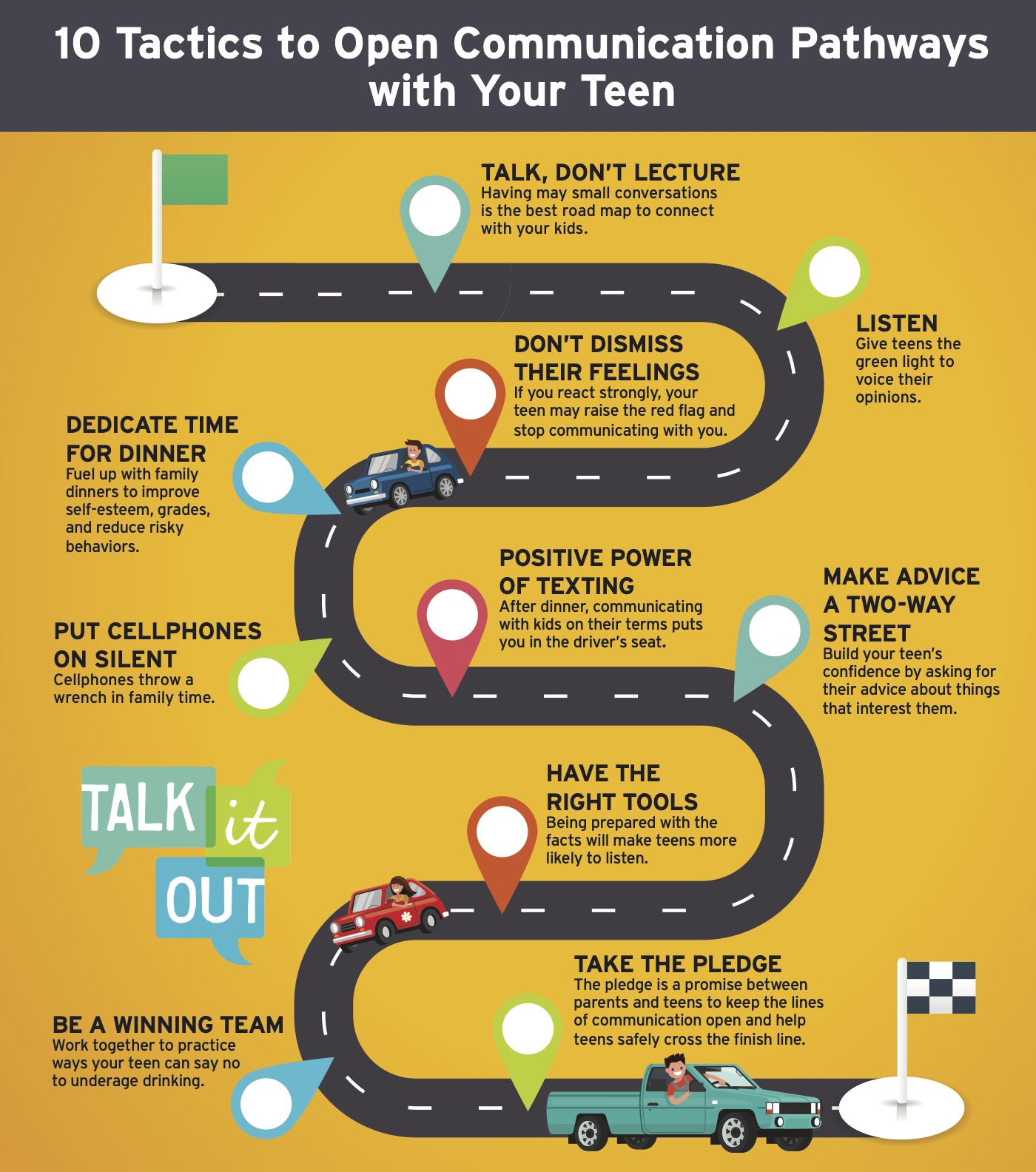
Prefer a quick reference?
This infographic outlines 10 simple ways to keep communication open with your teen.
Stay Up-To-Date With Talk it Out NC
Read Our Latest Blog

Who Influences Teens More: Parents or Friends?
Every teen faces choices about alcohol. Parents may wonder, when their child reaches that crossroads: Will they listen to me, [...]

The Community Resiliency Model: Helping NC Teens Build Coping Skills and Confidence
North Carolina teens in 2025 face a wide range of anxieties, including ripple effects from the pandemic, academic stress, and social pressures. These stressors [...]

How North Carolina Is Fighting Underage Drinking
Imagine being 16 years old, sneaking into a party on a Friday night. The laughter is loud, the music is [...]
Our Partners